The Glarus Alps Battery with Algae Cultivation: Multifunctional use of Existing Infrastructure
Jonas Zimmermann
HS 2024 Switzerland at a Crossroads
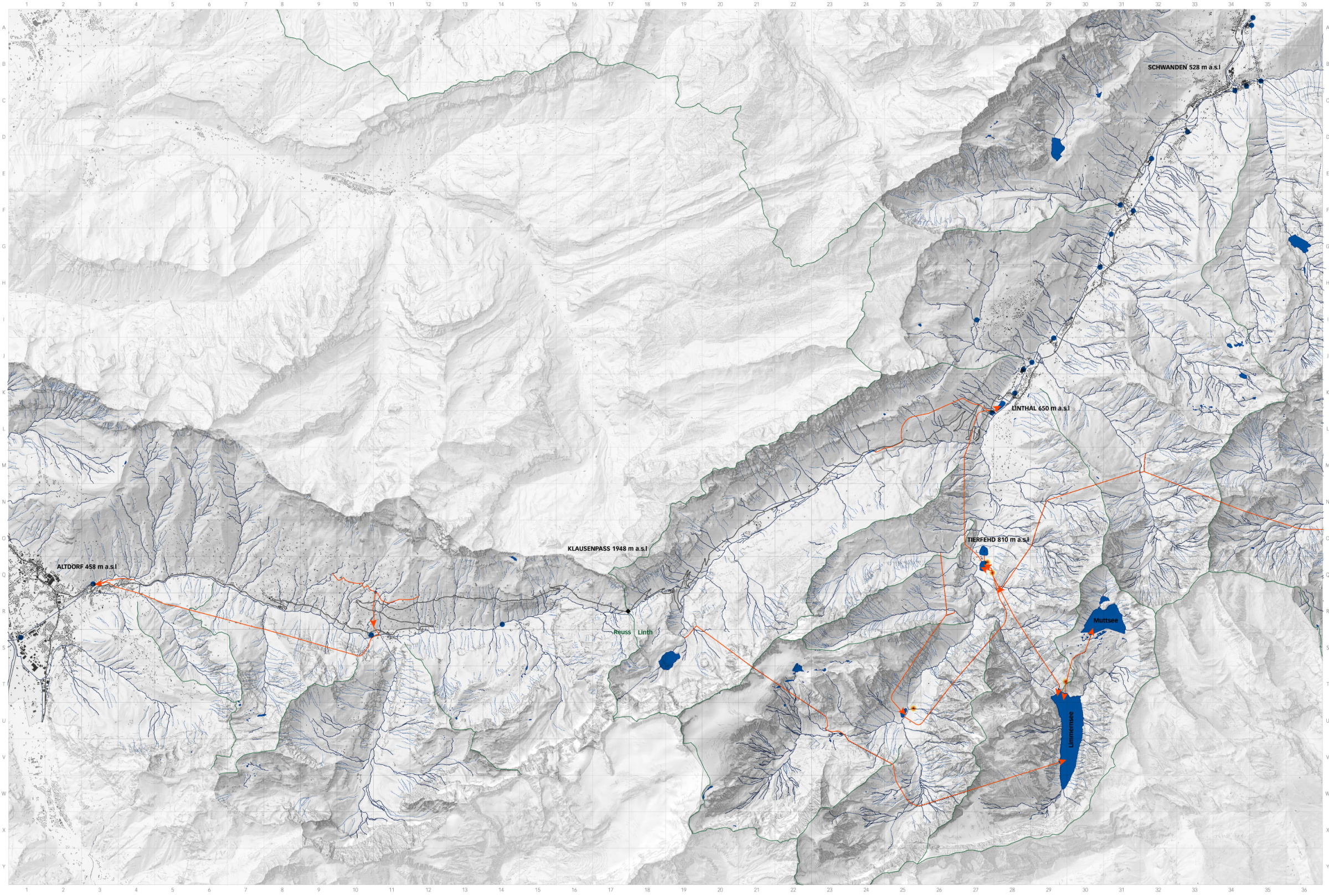
The logbook ‘Klausenpass: Between two distinct valleys’ was created during the research phase on the topic ‘Switzerland at a Crossroads’ in the Klausenpass region. It focused on the similarities and differ- ences between the Schächental and Glarnertal. With several interviews, we explored the infrastructure in the landscape, living systems and the migration to the centres.
The resulting project ‘The Glarus Alps Battery with Algae Cultivation’ deals with the question of how existing infrastructure systems, vacant buildings and agriculture can be used to create a post-fossil production and at the same time a qualitative place with added value for the local population with just a few tweaks.
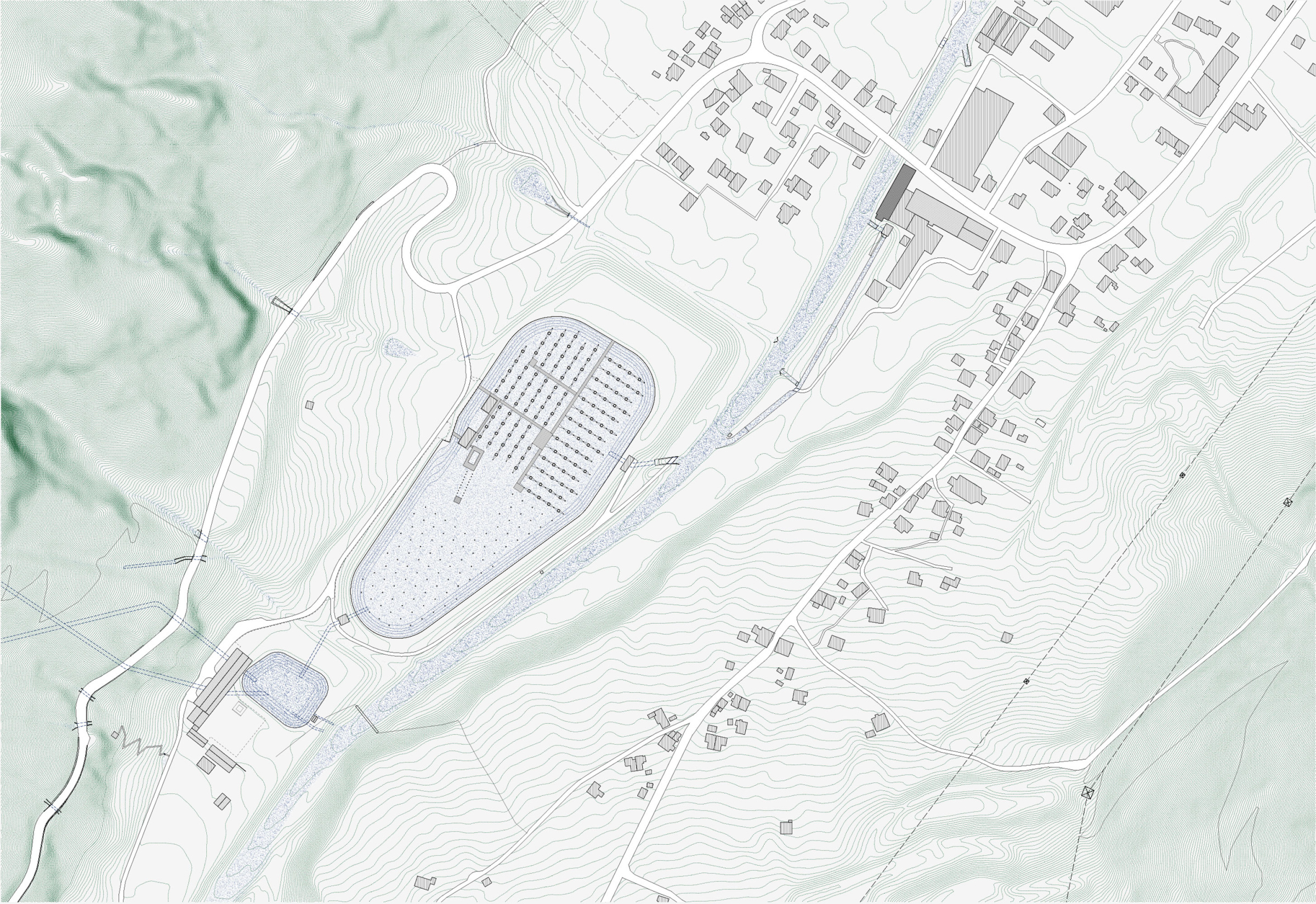
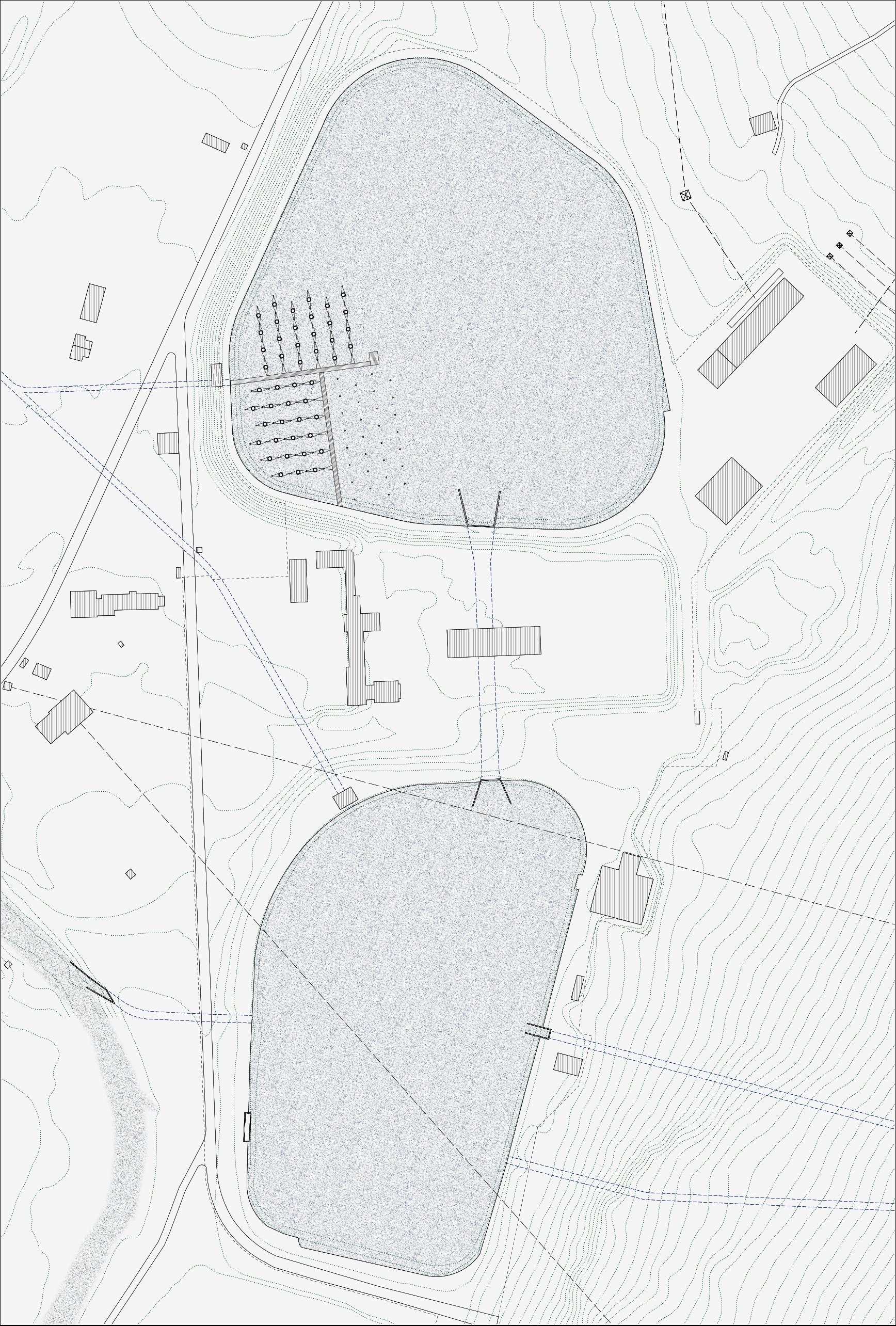
The Linth-Limmern pumped storage power plant produces energy using hydropower. The power plant network makes it possible to collect turbid water and pump it back up when the energy price is low in order to generate energy again. In addition to the high-Alpine Muttsee and Limmernsee reservoirs, there are the Tierfehd and Linthal compensating reservoirs in the valley. These are monofunctional con- crete reservoirs, which are fenced in and offer no added value.
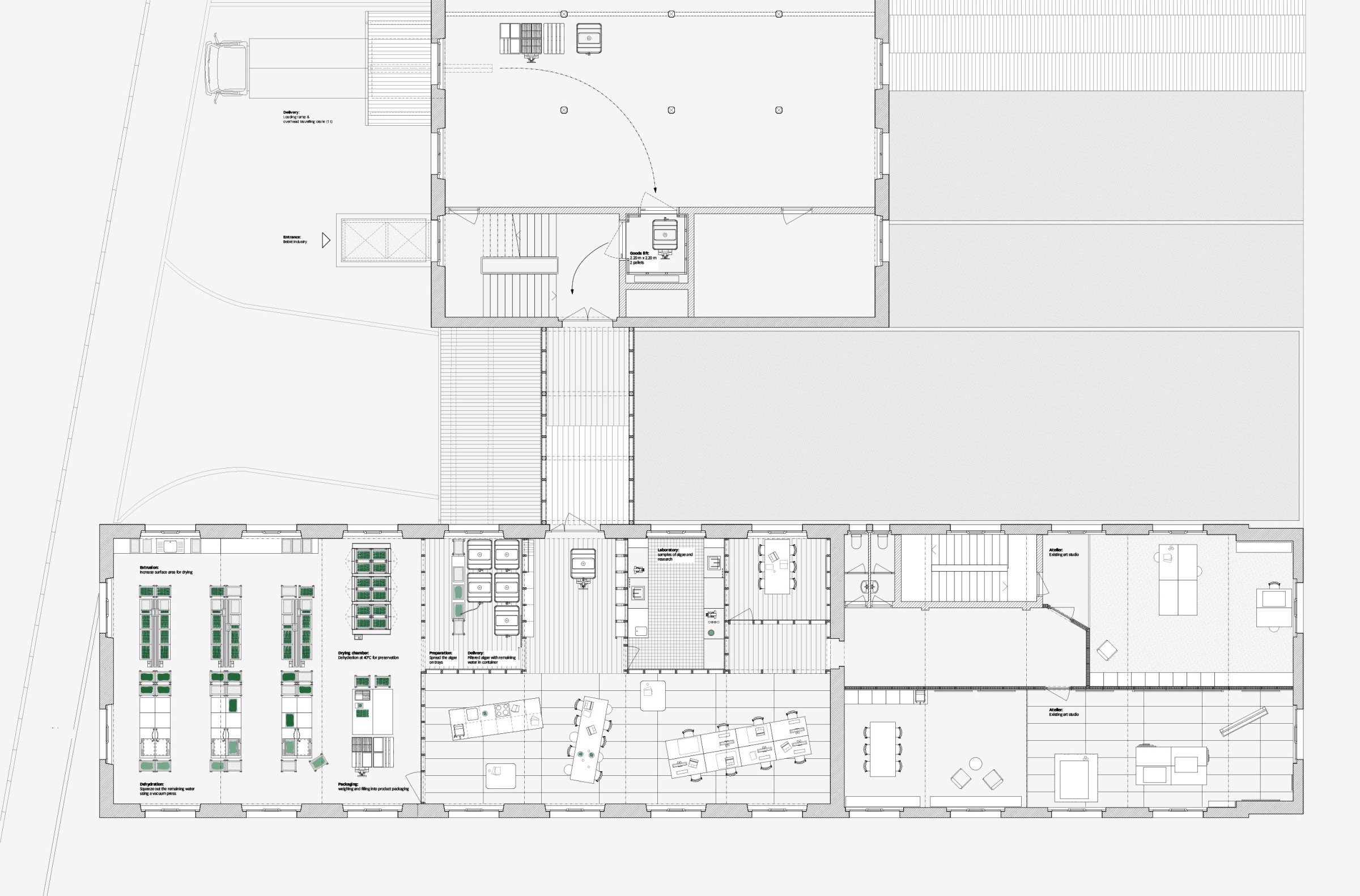
After the collapse of the textile industry, the valley is characterised by vacant industrial buildings, which are underused. Due to the vacancy and the location, there is little economic pressure on real estate compared to urban areas. This provides cost-effective space for projects and innovative ideas. Besides the former industrial buildings, the valley is very agricultural. In Switzerland, 270,000 tonnes of animal feed are imported from soya every year. Agroscope is currently researching alternative sources of protein, such as algae. These can be produced on uncultivated land and have a higher protein con- tent per kg. Growth occurs through photosynthesis and CO2 in a closed system.
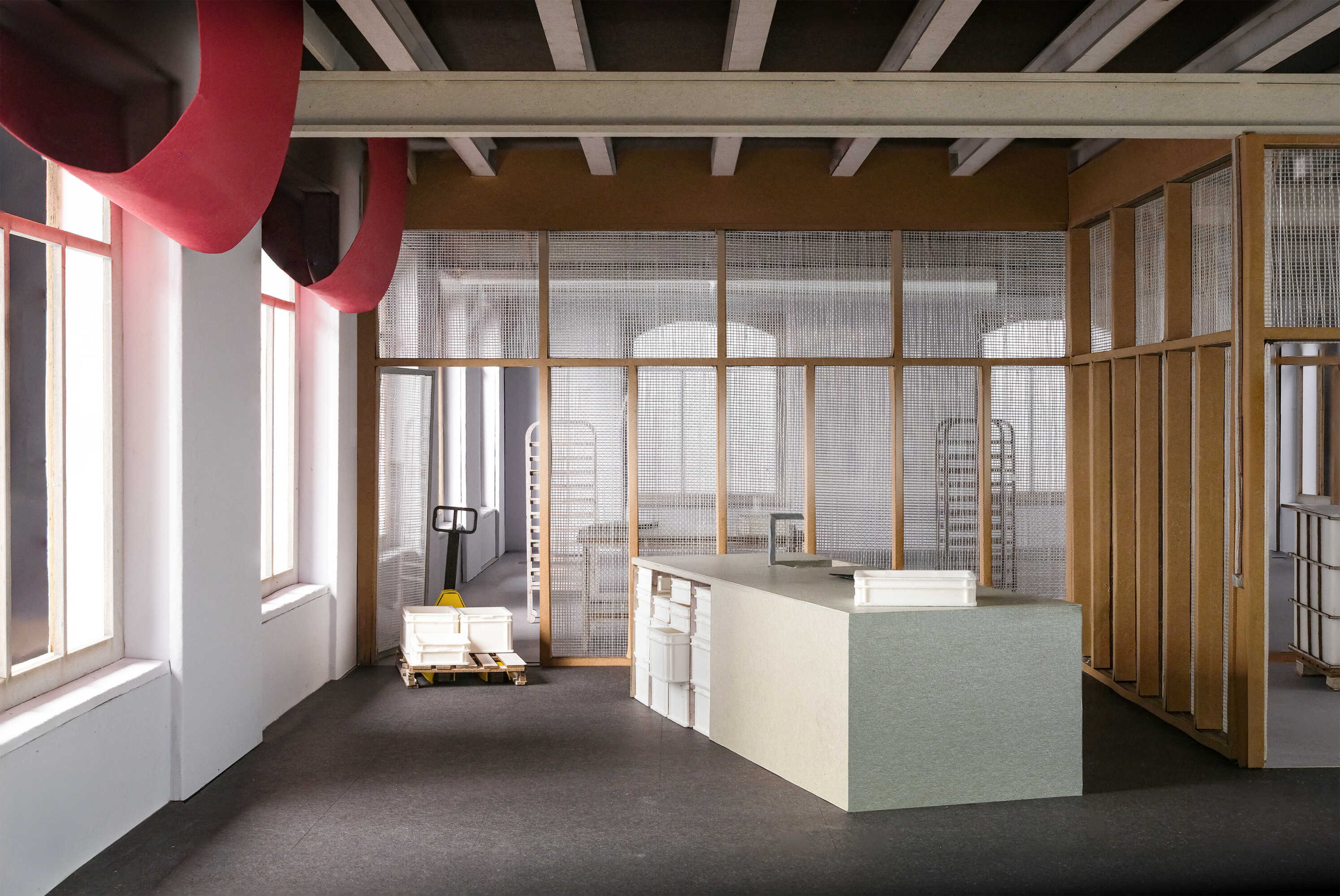
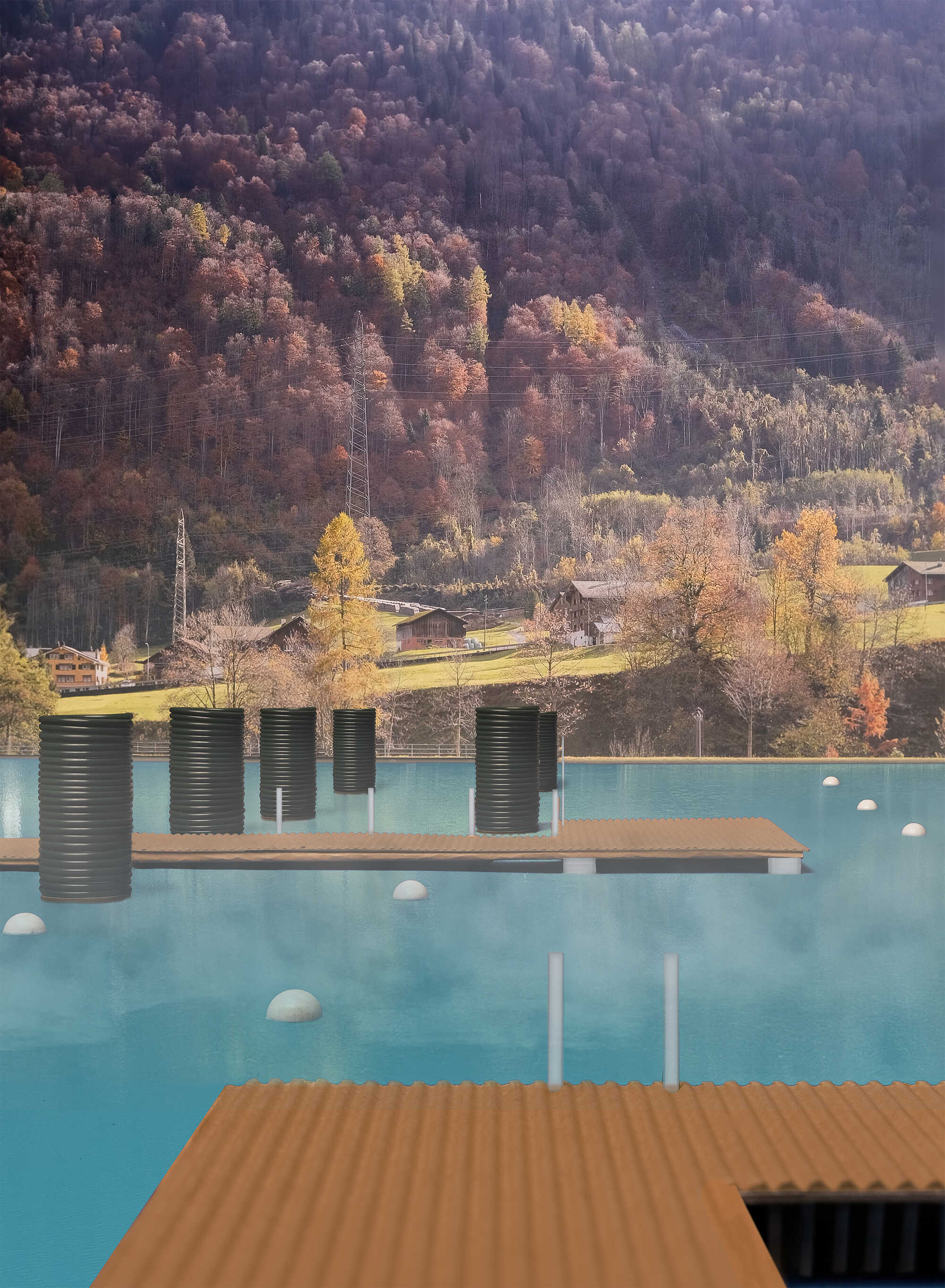
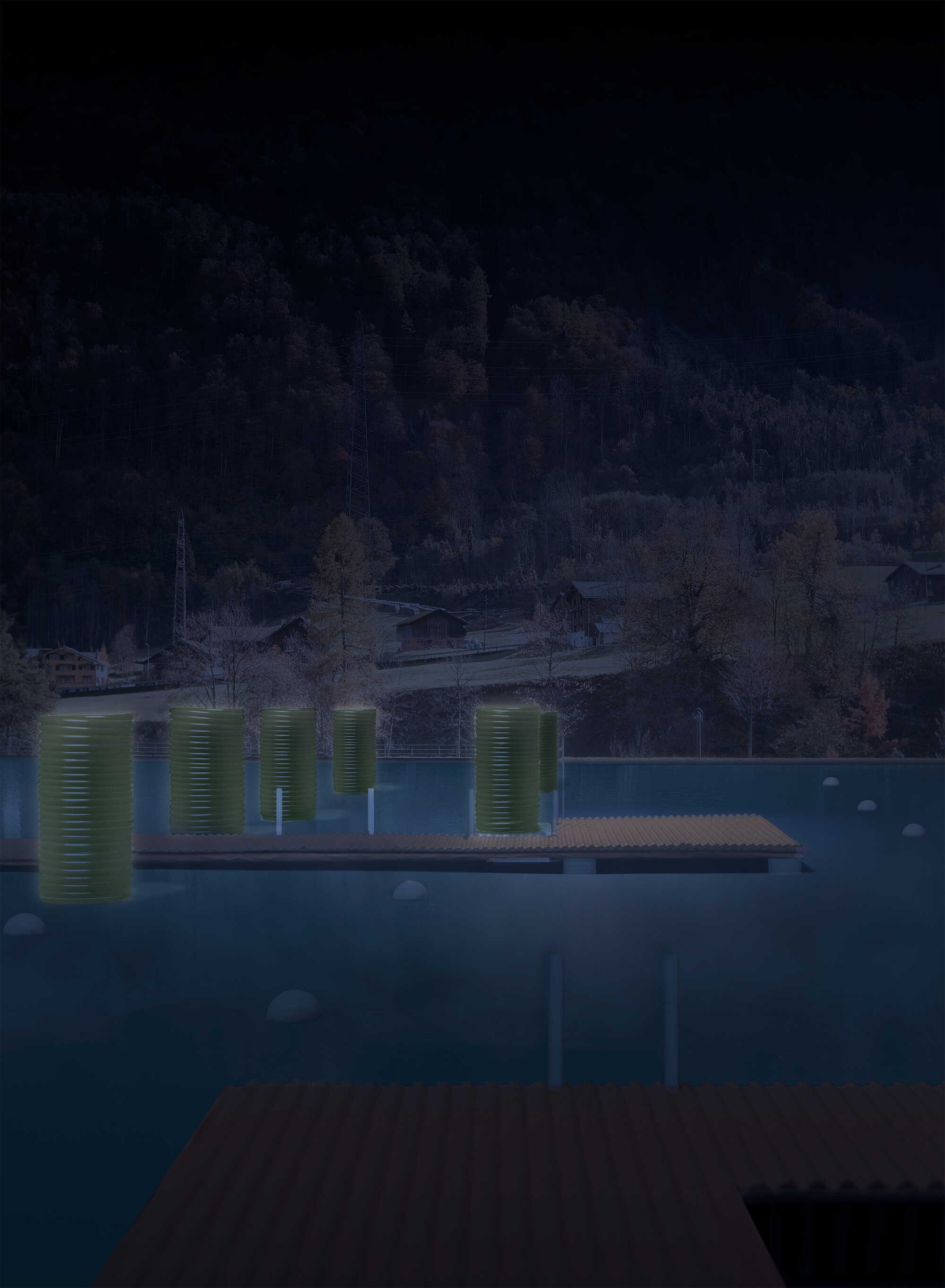
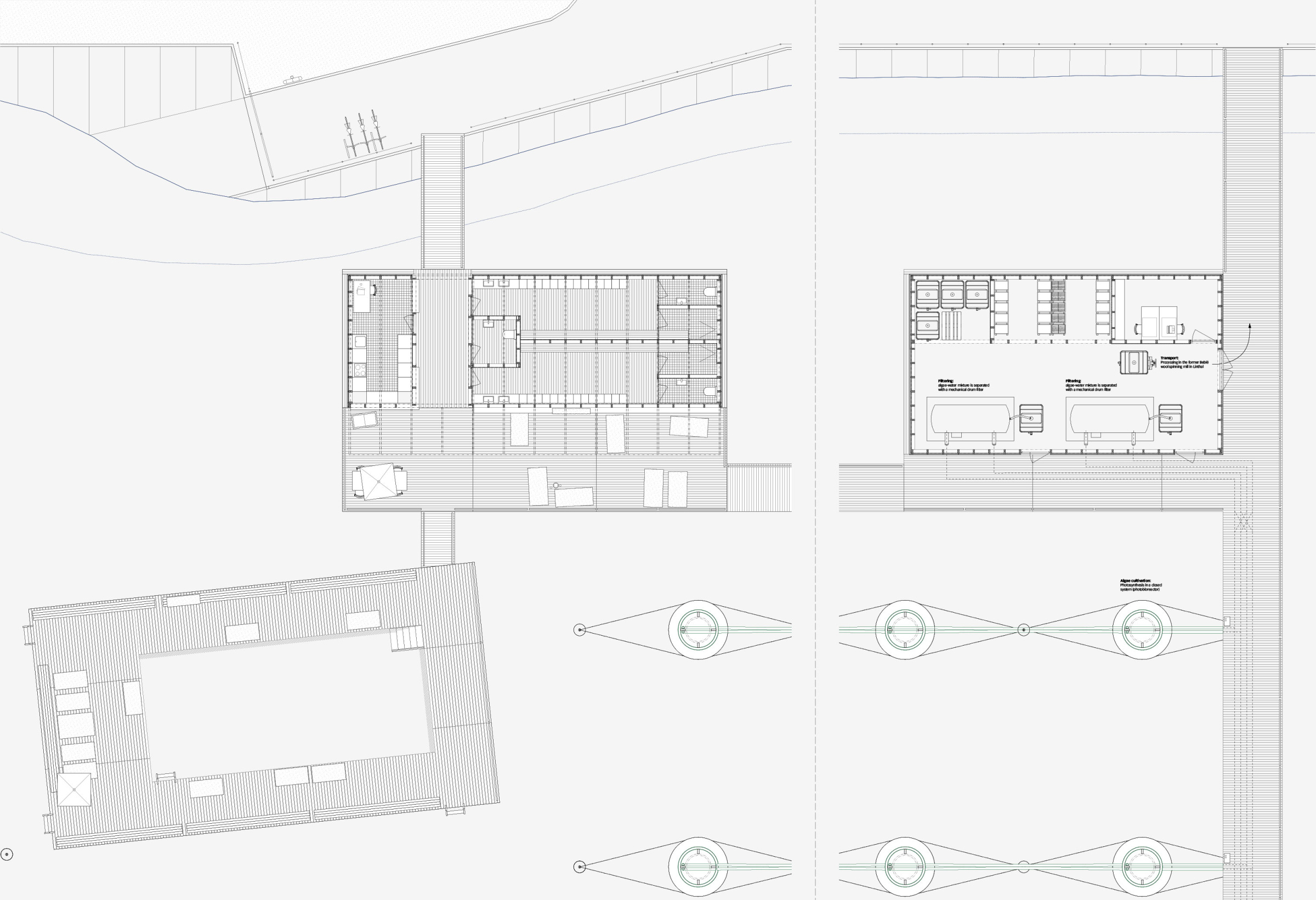
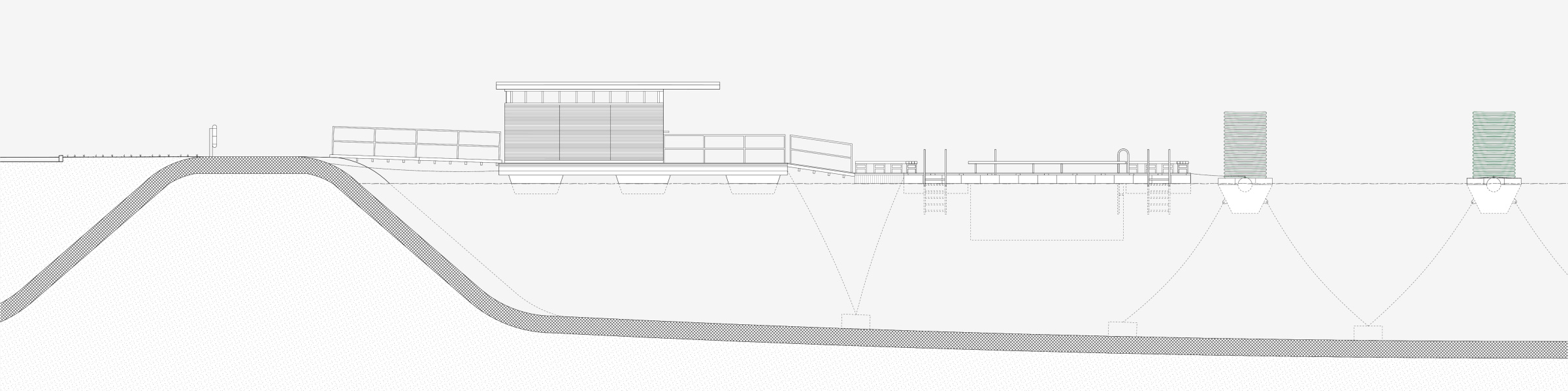
The project combines a floating algae production facility on the compensation basin built for energy generation with a public swimming pool as an additional function and added value for the local popula- tion. The algae will be processed in the nearby former Bebié wool spinning mill, which will be converted with minor interventions. Both the construction of the bath and the installations in the industrial building are made of unused hardwood.